

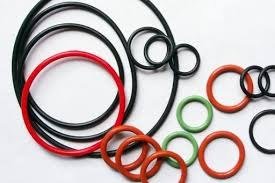
The choice between NBR (nitrile butadiene rubber), FKM (fluoroelastomer), EPDM, HNBR, and PTFE is an engineering decision, not a preference. Each compound has defined operating limits. In GCC industrial conditions — sustained high ambient temperature, aggressive process media, continuous-plant duty cycles — those limits are reached faster than European or American catalogue ratings suggest.
NBR — the baseline hydraulic compound
NBR (also known as Nitrile, Buna-N) is the standard compound for hydraulic sealing in petroleum-based fluid systems. It offers good mechanical properties, resistance to petroleum oils, and adequate performance across a broad temperature range.
The practical temperature ceiling for continuous NBR service is approximately 100°C. In GCC conditions where ambient temperatures reach 45–50°C and hydraulic circuits generate additional heat, this ceiling is approached faster than in temperate climate installations. NBR is not suitable for phosphate ester hydraulic fluids, synthetic esters, or applications with H₂S (hydrogen sulphide) exposure.
Compound comparison — key properties
| NBR | Petroleum hydraulic oils, continuous to ~100°C. Not for phosphate ester or H₂S |
| HNBR | NBR base with improved heat and H₂S resistance. To ~150°C. Sour gas applications |
| FKM / Viton | Petroleum, synthetic fluids, chemicals, H₂S. To ~200°C. Higher cost |
| EPDM | Water, steam, phosphate ester. Not for petroleum oils |
| PTFE | Near-universal chemical resistance. Low friction. Guide rings, static seals |
| FFKM | Full chemical resistance. Extreme temperature. Specified for critical process plant |
Temperature ratings, Shore A hardness grades, and media compatibility tables by compound — pending client data. Full material reference guide in preparation. See Technical Library → Material selection guide for the complete table when published.
FKM — when to move up from NBR
FKM (commercially known by several trade names including Viton) handles higher temperatures, aggressive chemicals, and sour gas environments that NBR cannot tolerate. The practical continuous service temperature ceiling for FKM is approximately 200°C. FKM is also compatible with a wider range of hydraulic fluids, including synthetic esters and phosphate esters.
The cost differential over NBR is significant — typically 3 to 8 times per seal depending on size and profile. This makes FKM appropriate where operating conditions genuinely require it, not as a blanket upgrade. The decision criteria are: fluid type (petroleum vs synthetic vs process chemical), sustained operating temperature, and presence of H₂S or other aggressive media.
HNBR — the sour gas specification
HNBR (hydrogenated nitrile butadiene rubber) occupies the position between standard NBR and FKM. It provides the mechanical properties of NBR — including high hardness grades suitable for high-pressure applications — with improved resistance to H₂S and elevated temperatures to approximately 150°C. In UAE and Saudi Arabian oil and gas upstream operations, where sour crude is common, HNBR is the standard specification for hydraulic cylinder seals exposed to process fluid.
EPDM — water and steam applications
EPDM is specified for water, steam, phosphate ester hydraulic fluids, and potable water contact applications. It is not compatible with petroleum-based hydraulic oils — contact with petroleum fluid causes rapid swelling and failure. In GCC desalination and water treatment applications, EPDM or NSF (National Sanitation Foundation)-approved compounds are required for seals in contact with treated water.
GCC ambient conditions and compound life
European and American compound specifications are tested and rated in moderate ambient conditions. In GCC conditions — sustained outdoor ambient temperatures of 40–50°C, combined with direct sun loading on hydraulic reservoirs and cylinders — the effective service temperature of the compound is higher than the hydraulic circuit temperature alone would suggest. Maintenance intervals based on European specifications should be reviewed for GCC applications, particularly for cylinders on mobile plant operating outdoors.