
In most cases the seal did not fail. The bore failed it. A scored, oval, or tapered bore destroys a new seal within weeks of installation — regardless of seal quality or material grade.
Why the bore, not the seal, is the primary variable
A hydraulic rod seal or piston seal runs against the bore surface on every stroke. The seal lip maintains contact with that surface to prevent fluid bypass. If the bore surface is out of tolerance — scored from abrasive contamination, oval from side-loading, or tapered from asymmetric wear — the seal cannot maintain consistent contact across the full stroke. It fails at the defective section. The failure repeats on every replacement until the bore is corrected.
This is the most common misdiagnosis in hydraulic maintenance: attributing repeated seal failure to the seal compound, the seal supplier, or the assembly method, when the actual cause is bore geometry.
What honing does — and what it does not do
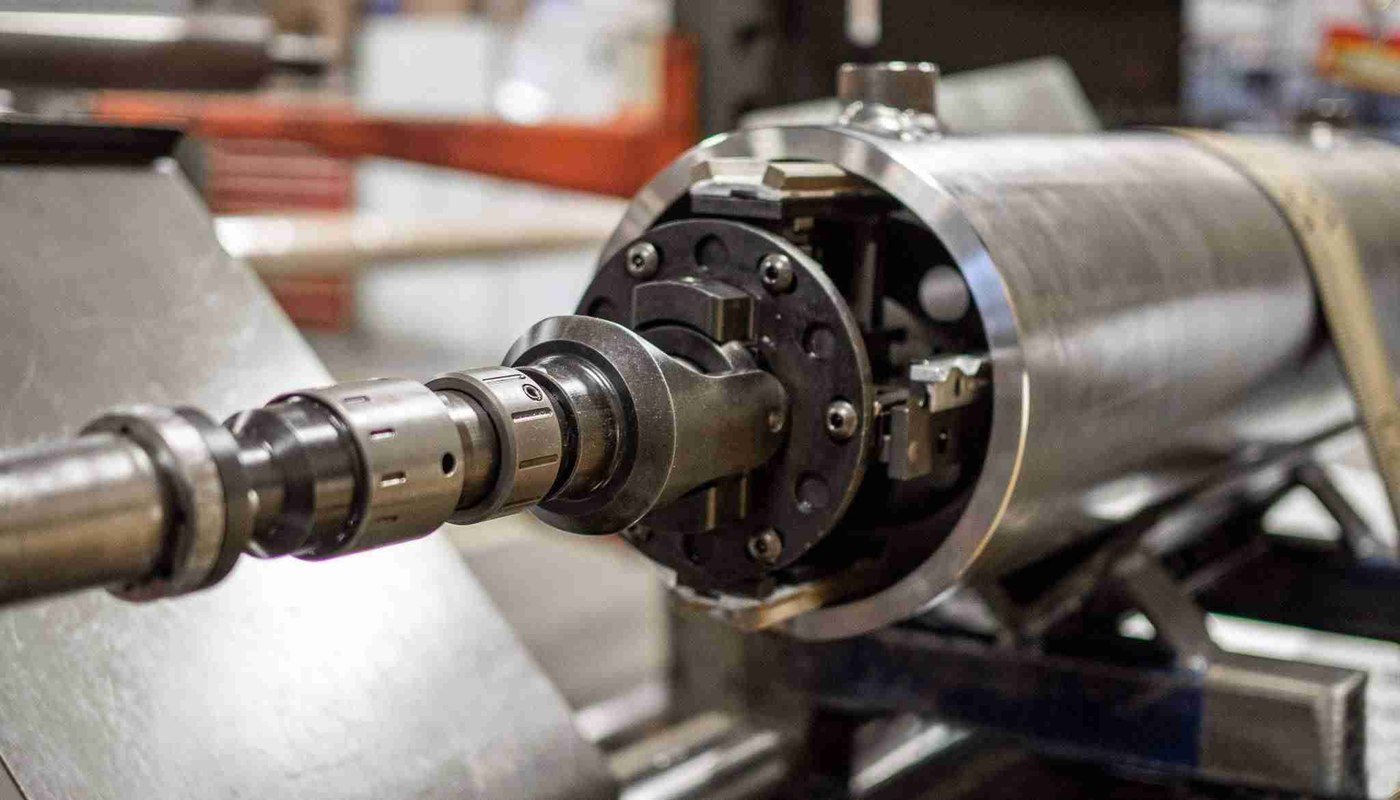
Honing is a geometry operation. It restores bore roundness, removes taper, and produces the specific surface finish — typically Ra 0.2 to 0.8 µm depending on seal type — that a hydraulic seal requires to seat correctly and reach its rated service life.
Honing is not cleaning. A bore that has been wiped out and visually inspected has not been honed. The surface finish and roundness that determine seal life are sub-micron properties that cannot be assessed visually or by feel.
Santoo cylinder honing — specification
| Bore diameter range | 50 mm – 900 mm |
| Dimensional tolerance | ±2 µm |
| Max bore length — open cylinder | 16,000 mm |
| Auto taper correction | Integrated |
| Process logging | Digital, per work order |
| Measurement | Pre- and post-operation, recorded |
Five bore conditions that cause repeated seal failure
- Surface scoring from abrasive particulate contamination in the hydraulic fluid — the most common cause of premature seal failure in GCC cement, mining, and construction plant
- Ovality from asymmetric side-loading — cylinders used in non-ideal angular positions develop bore ovality over time
- Taper from differential wear along the bore length — common in long-stroke cylinders where the seal traverses the full length
- Chrome layer degradation on the bore wall from corrosion or mechanical damage
- Previous honing performed without documented measurement — bore geometry assumed correct, not confirmed
The rod surface is equally critical
The rod wiper and rod seal run against the external rod surface. Pitting, scoring, and corrosion on the rod cause the same failure pattern — the seal fails at the defective section of the rod on every pass. Rod surface restoration (straightening, hard chrome, and polishing to Ra 0.2 µm) addresses the external running surface in the same way that honing addresses the internal bore.
A complete cylinder rebuild addresses both. Honing the bore without assessing the rod surface — or restoring the rod without honing — leaves half the failure mode unaddressed.
Why seals manufactured to actual bore geometry outperform catalogue kits
Third-party seal kits are manufactured to nominal bore dimensions. A bore that has been honed — and thus has material removed — may be slightly larger than the nominal dimension depending on how much was removed during the honing pass. A seal cut to the actual post-honing bore measurement will have the correct interference fit. A seal manufactured to the nominal dimension may be marginally undersized, which produces an effective seal on the initial pressurisation but degrades faster under dynamic cycling.
Santoo measures the bore after honing and manufactures the seal kit to that measurement. This is the integration that most workshops cannot offer — and the reason the rebuilt cylinder functions as a unit, not as two separate repair jobs that happen to be in the same housing.